
July 16, 2026
7 Reasons Car Detailing Services Are Worth Every Penny
Keeping a vehicle in excellent condition takes more than regular washing. Car de
Read more about this is some title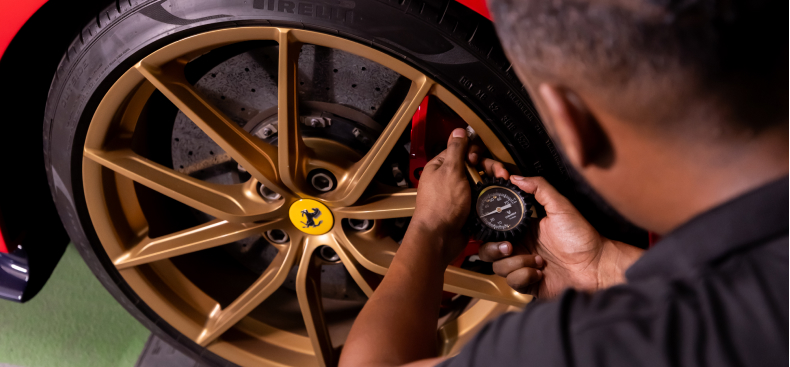
How Can Heavy-Duty Tire Cradles Improve Fleet Maintenance Efficiency?
Picture a fleet of vans sitting idle over a long weekend, tires quietly developing flat spots nobody notices until Monday’s first delivery run feels like driving over gravel. That small, avoidable problem quietly drains fleet budgets everywhere. A heavy-duty tire cradle in the UAE exists precisely to stop that cycle before it starts. Keep reading, because this simple piece of equipment might be the most overlooked fix in your entire maintenance routine.
A tire cradle is a contoured support platform designed to hold a parked vehicle’s tires in their natural shape, preventing the flattened contact patch that forms when weight sits on one spot for too long. Heavy-duty versions handle larger fleet vehicles and repeated daily use.
Fleets rarely run every vehicle every single day. Between shifts, seasonal slowdowns, and maintenance queues, tires sit stationary far more often than owners realize, quietly accumulating wear that shows up later as vibration, uneven tread, and unplanned tire replacement costs.
Extended parking causes tires to settle into a flattened shape at the contact point. Cradles distribute pressure evenly, protecting tread integrity even during multi-day storage between routes.
Tires that avoid repeated flat-spotting stress last considerably longer before replacement becomes necessary, directly reducing one of a fleet’s largest recurring operational expenses over time.
A vehicle pulled from storage with compromised tires often needs immediate attention before it can safely hit the road, delaying schedules and creating avoidable disruptions across delivery or service routes.
Fleets that rotate vehicles in and out of active duty benefit from cradles that keep idle units road-ready, so switching vehicles never means inheriting a hidden maintenance problem.
Fewer emergency tire swaps and premature replacements translate directly into predictable maintenance budgets, letting fleet managers plan spending instead of reacting to avoidable failures.
Not every cradle handles every vehicle class equally well. Heavier trucks and vans need reinforced cradles rated for their weight, while lighter fleet cars can use standard-capacity versions without sacrificing protection or stability.
Tire care is only one piece of keeping fleet vehicles road-ready. Many operators pair cradle use with routine visits to auto detailing near me in UAE services, keeping vehicles presentable and mechanically sound for client-facing routes and inspections alike.
The biggest mistake fleets make is treating tire cradles as an occasional accessory rather than a standard part of every parking routine. Consistency is what actually prevents damage, not sporadic use during especially long storage periods.
How long can a vehicle sit on a tire cradle without issue? Quality cradles are designed for both short and extended parking, distributing weight evenly so flat spots don’t develop regardless of how many days a vehicle remains stationary.
Do tire cradles work for all fleet vehicle types? Most cradles accommodate a range of tire sizes, though heavier trucks and vans typically require reinforced, higher-capacity cradles built specifically for their additional weight load.
Can flat spots be reversed once they’ve already formed? Minor flat spots sometimes resolve after driving, but severe or long-term flat-spotting often requires tire replacement, which is exactly what cradles are designed to prevent.
Is installing tire cradles a complicated process for large fleets? Not at all. Vehicles simply park directly onto the cradles like a normal parking spot, requiring no special training or additional time from drivers.
Do tire cradles help with fuel efficiency as well as tire life? Indirectly, yes. Evenly worn tires reduce rolling resistance and vibration, which support smoother performance and slightly better fuel efficiency across a well-maintained fleet.
Small, consistent maintenance habits often deliver bigger savings than expensive emergency fixes ever could. A heavy-duty tire cradle in the UAE protects your fleet’s tires during every idle hour, cutting downtime, extending tire life, and keeping your maintenance budget predictable instead of reactive. It’s a small investment that quietly pays for itself every time a vehicle rolls out ready to work.

September 10, 2025

September 10, 2025
January 17, 2026
January 22, 2026

January 22, 2026
July 16, 2026
Keeping a vehicle in excellent condition takes more than regular washing. Car de
Read more about this is some title
July 16, 2026
Picture a fleet of vans sitting idle over a long weekend, tires quietly developi
Read more about this is some title
July 2, 2026
Owning a luxury, classic, or high-performance vehicle is a major investment. How
Read more about this is some title